Quick answer
Business formal for women means a matched suit (same fabric, same color, jacket and skirt or trousers), closed-toe heels, neutral hosiery, and minimal jewelry — think board meetings, galas, and client pitches. Business professional is slightly more relaxed: separates are fine, color range widens, and flats or lower heels are acceptable for daily office wear.
Why This Distinction Actually Matters
If you have ever stared at an invitation that says "business formal" and wondered whether your usual office blazer-and-trouser combination will pass muster, you are not alone. A quick search for business formal vs business professional women reddit threads turns up pages of women trading screenshots of dress codes and asking, essentially, "but what does that mean for me?" The confusion is understandable, because most dress-code guides were written with men's tailoring in mind — ties, cufflinks, Oxfords versus Derbies — and simply layer women's clothing on top as an afterthought.
That gap is exactly what this article closes. Business formal and business professional are not interchangeable, and the differences are not just about hemlines. They show up in fabric weight, in whether your suit is matched or separates, in hosiery, in how much jewelry you can get away with, and in the kind of bag you carry into the room. Below is a women-specific, side-by-side comparison, followed by the female "step-up" markers that do the same work a tie or cufflinks do for men, and a guide to styling one capsule suit across both registers.
Business Formal vs Business Professional: The Comparison Table
| Element | Business Formal | Business Professional |
|---|---|---|
| Suit type | Matched suit — identical fabric and color, jacket plus skirt or trouser | Separates acceptable — contrasting blazer and trouser or skirt |
| Fabric | Wool crepe, fine worsted wool, silk-wool blend, fully lined | Wool blend, ponte, lighter weight, partial lining |
| Color | Navy, charcoal, black — no pattern | Navy, charcoal, camel, soft grey, subtle pinstripe or check |
| Blouse/neckline | Silk or silk-blend shell, modest round or boat neckline | Cotton or silk-blend blouse, slightly more neckline flexibility |
| Skirt length | At or just below the knee, no slits above knee | Knee-length to midi, minor slit acceptable |
| Hosiery | Sheer nude or black hosiery expected | Optional, bare legs generally acceptable |
| Shoes/heel height | Closed-toe pump, 2–3 inch heel, neutral leather | Closed-toe flat, loafer, or low heel acceptable |
| Jewelry | Minimal — single ring, stud earrings, thin chain | Slightly more latitude — a statement watch or one bolder piece |
| Bag | Structured leather tote or top-handle, neutral | Structured bag, slightly more color or texture allowed |
| Occasions | Board presentations, galas, final-round interviews, client pitches | Daily office wear, internal meetings, standard client calls |
This table is the piece missing from most dress-code advice: a genuinely women's framework rather than a men's one with "wear a skirt suit" bolted on.
The Female "Step-Up" Markers
Men's formalwear has obvious binary signals: a tie goes on or comes off, cufflinks appear or disappear, an Oxford reads more formal than a Derby. Women's formalwear works differently — the signals are more granular, which is exactly why they get overlooked. Here is what actually elevates an outfit from business professional to business formal:
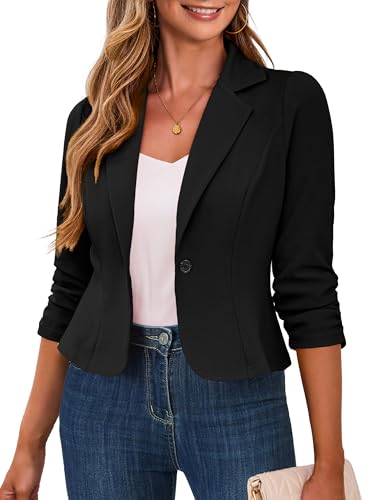
Matched suiting over separates. A jacket and trouser cut from the same bolt of fabric reads as formal intention in a way that even a beautifully coordinated blazer-and-trouser pairing does not. If you only own one or the other, the matched suit is the better investment for high-stakes days.
Fabric weight and finish. Wool crepe and fine worsted wool hold a sharper line and photograph better under boardroom lighting than the softer ponte or stretch-blend suiting that works perfectly well for daily business professional dressing. A silk-wool blend with full lining is the fabric equivalent of a French cuff — it signals the garment was chosen deliberately, not grabbed off a rack for convenience.
Hosiery. This one surprises a lot of women. Sheer hosiery, nude or black depending on the suit color, is still expected at the most formal end of corporate dress codes, particularly in law, finance, and consulting. Bare legs are the business professional default; hosiery is the formal marker.
Hemline discipline. A hem that sits precisely at or just below the knee, with no slit above it, is the formal standard. Business professional allows more room — a midi skirt or a modest slit reads as appropriate rather than casual.
Jewelry restraint. This is the female equivalent of choosing cufflinks over a bare cuff, except in reverse: less is more formal. One ring, stud earrings, a thin chain. Business professional allows a statement watch or a single bolder piece; business formal asks you to edit down.
Bag and outerwear. A structured leather tote or top-handle bag in a neutral tone is the formal default. Business professional gives you room for a crossbody or a bag with more texture or a pop of color. Outerwear follows the same logic — a tailored wool coat for formal, a trench or softer topper for professional.
One Capsule, Two Registers: The Navy Wool-Crepe Suit
The easiest way to understand the distinction is to watch one capsule move between the two dress codes. Start with a Lauren Ralph Lauren Women's Double-Breasted Wool Crepe Blazer and matching Horton Flare Trouser - Washable Wool Twill :: Dark Navy — this pairing is the backbone of both looks.
Styled for business formal: the matched blazer and trouser, a Washable Stretch Silk Shell Tank in Ivory, sheer nude hosiery if you opt for the skirt version, a Jones New York Women's Linela Pointed Toe Slingback Dress Pumps, a STAISE Designer Top Handle Shoulder Bags for Women, Trendy ..., and a single Chain Necklace - Jewelry. Hair pulled back, minimal makeup, no visible logo. This is the outfit for a board presentation or a final-round partner interview.
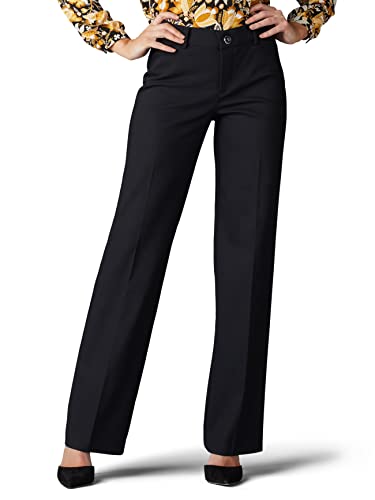
Styled for business professional: swap the trousers for a REGULAR WOOL-BLEND WIDE-LEG PANTS - BLACK, pair the same navy blazer with a Turtleneck Sweater in Regal Wool in Black, go bare-legged, and step into Italian Leather Soft Loafer in Cognac. Carry a FURNIQ UK Women's Tan Woven Leather Crossbody Bag. This is Tuesday-in-the-office dressing — polished, but with room to move.
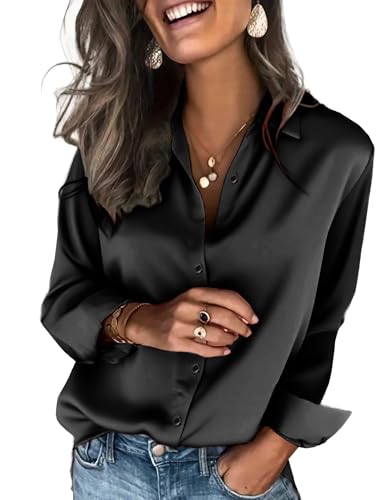
Notice that the blazer did not change. What changed were the fabric pairing, the hosiery decision, the shoe, and the bag — exactly the markers in the table above. If you want a deeper dive on how a single foundational piece moves across dress codes, how to style a white shirt for work walks through the same principle using a different anchor item.
How Dress-Code Invitations Actually Phrase This
Part of the confusion around business formal vs business professional women dress code questions comes from how vaguely invitations and offices word their expectations. "Business formal" on an event invitation almost always means the matched-suit, closed-toe, minimal-jewelry version above — event planners use it interchangeably with "corporate formal" or occasionally "boardroom attire." "Business professional" on a company handbook, by contrast, is usually signaling the daily-wear version: polished separates, flats permitted, hosiery optional. When in doubt, the safest move is to dress one notch more formal than you think the room requires — it is far easier to remove a layer of formality (take off the blazer, swap hosiery for bare legs) than to manufacture it on the spot.
A Note on Pants, Skirts, and Jeans
A common question is whether business formal vs business professional women pants rules differ from skirt rules, and the answer is that trousers are acceptable in both registers as long as they are part of a matched or fully tailored look — a wide-leg wool-crepe trouser with a matching jacket reads just as formal as a skirt suit. Where trousers lose formality is in fabric and fit: anything with stretch denim styling, a casual wash, or a relaxed drape moves you toward business casual. And to answer the business formal vs business professional women jeans question directly — jeans belong in neither category, no matter how dark the wash or how structured the blazer you pair them with. If your office culture allows denim at all, that is a business casual allowance, not a business professional one.
Business Professional vs Business Formal by Occasion and Industry
Context changes the calculus more than most guides acknowledge. A board presentation or investor pitch calls for business formal regardless of your company's everyday dress code — this is also true of galas, award ceremonies, and final-round interviews for senior roles. Daily office wear, internal meetings, and routine client calls sit comfortably in business professional territory. Industry matters too: law and investment banking tend to run formal by default, even for daily wear, which is worth understanding before you build out a work capsule for either field — see the modern law firm dress code for women and the investment banking dress code guide for industry-specific detail. Creative, tech, and many consulting firms, by contrast, default to business professional and reserve formal dressing for client-facing or external events.
It is also worth being clear about where business casual fits, since it is often confused with professional. The business formal vs business casual women distinction is much larger than the formal-to-professional gap — business casual drops the blazer requirement entirely, opens the door to knits, flats, and more color, and generally does not expect a matched suit at all. If you are unsure whether your office's "business casual" actually means business professional, it usually becomes clear through footwear: sneakers and sandals are a business casual signal, while the best white sneakers for work only belong in professional or formal settings on designated casual days, if at all. For a full walkthrough of outfit-building across every registers, Her Capsule Edit covers the fabric and silhouette decisions in more depth than a single article can.
Shopping List
- TAILORED DRAPED WOOL-BLEND BLAZER - NAVY
- navy wool-crepe tailored trousers
- Akris Double-Face Crepe Wool Pencil Skirt
- Washable Stretch Silk Shell Tank in Ivory
- Turtleneck Sweater in Regal Wool in Black
- Nine West Women's Tatiana Pointed Toe High Stiletto Pumps
- Italian Leather Soft Loafer in Cognac
- GEMIU Medium Women's Shoulder Handbag Structured Top-handle ...
- FURNIQ UK Women's Tan Woven Leather Crossbody Bag
- Wolford Sheer Nude 8 Tights
- BEBEWO 14k Yellow Gold 1mm/1.2mm/1.35mm Thin ...
- REGULAR WOOL-BLEND WIDE-LEG PANTS - BLACK
FAQ
Is business professional the same as business formal? No. Business formal requires a matched suit, closed-toe heels, and minimal jewelry, reserved for high-stakes occasions. Business professional allows coordinated separates, flats, and more color for everyday office wear.
What is the actual difference between business formal and business professional attire for women? The core differences are the suit (matched versus separates), fabric weight, hosiery expectations, heel height, and jewelry restraint. Business formal is stricter on all five; business professional gives you room to adapt.
Can I wear pants for business formal, or does it have to be a skirt? Pants are acceptable for business formal as long as they match the jacket in fabric and color, forming a true suit rather than coordinated separates.
Are jeans ever appropriate for business professional dress codes? No. Jeans fall under business casual, even dark, structured styles paired with a blazer. If your workplace allows denim, it is signaling a business casual day, not business professional.
How is business casual different from both of these? Business casual drops the blazer and matched-suit requirement altogether, allows flats, sneakers on some days, and knitwear, and is considerably more relaxed than either business professional or business formal.
Conclusion
The line between business formal and business professional is finer than most advice admits, and for women it is drawn in fabric weight, hosiery, hemline, and jewelry restraint rather than the tie-and-cufflink signals men rely on. Once you know what to look for — a matched suit versus coordinated separates, sheer hosiery versus bare legs, a structured bag versus a softer one — dressing for either register becomes a matter of swapping a handful of pieces within one well-chosen capsule, not building two separate wardrobes.
This post contains affiliate links. We may earn a commission at no extra cost to you.